For IT leaders and executives of large corporations, the 2027 deadline for the end of standard support for SAP ECC is not merely a chronological milestone; it is an organizational disruption vector. We are witnessing the end-of-life of an architecture that has dominated the market for over 15 years, making the transition to SAP S/4HANA a governance imperative.
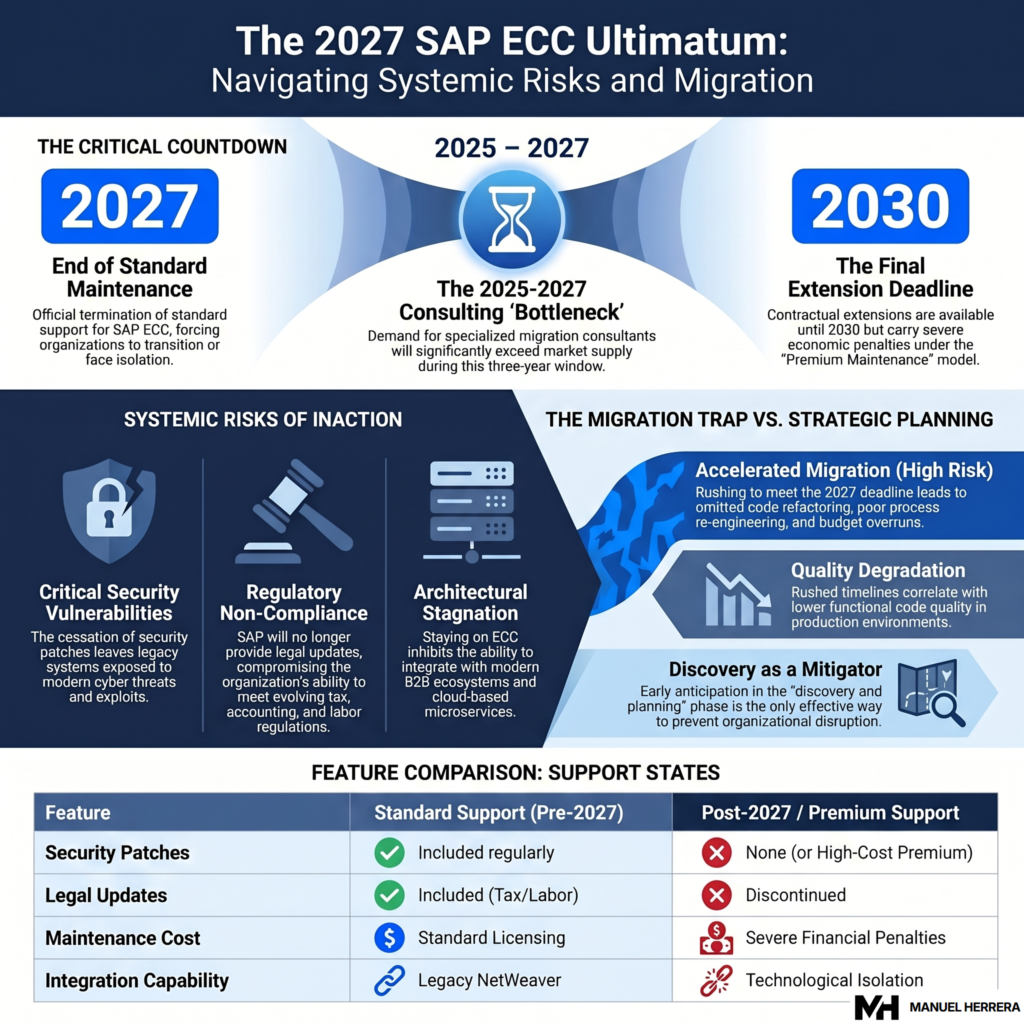
Stagnating on legacy systems carries critical risks. Starting in 2027, the cessation of security patch distribution will leave core systems exposed to vulnerabilities without official remediation. Furthermore, the discontinuation of legal and tax updates will directly compromise regulatory and accounting compliance. While a Premium Maintenance window exists until 2030, this option carries severe financial penalties and does not eliminate technological isolation, limiting integration with microservices architectures and modern B2B ecosystems.
An alarming data point for strategic planning is the «Bottleneck Effect» projected between 2025 and 2027. Demand for specialized consulting is expected to drastically exceed global supply, driving up execution costs and the risk of budgetary deviations. Pressure to meet the deadline is inducing rushed «as-is» migrations, which omit vital code refactoring and process re-engineering. This practice merely transfers inefficiencies and technical debt to the new platform, degrading functional quality in production environments.
The early discovery and planning phase is the only effective mitigator. This is not just a technical migration, but a structural transformation. Organizations that prioritize optimization over speed will ensure not only regulatory compliance but also a competitive advantage in the digital business era.
Is your roadmap aligned with actual market availability, or is your organization heading toward a systemic bottleneck?